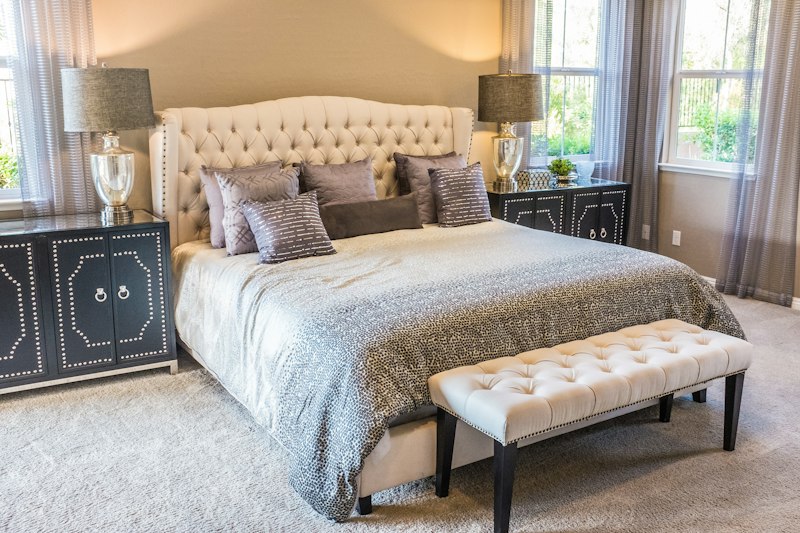
A genuinely restorative primary bedroom works subtly across nervous-system physiology long before conscious style appreciation enters the picture. Too many grand luxury bedrooms read aesthetically dramatic on magazine pages—lacquered glossy panels, mirrored closets, icy 4000K recessed pot lights, and synthetic wall-to-wall nylon pile—yet leave sleepers subtly restless amid dry HVAC rumble, volatile chemical off-gassing, and ungrounded street noise.
Biophilic primary bedroom architecture shifts focus toward authentic sensory recovery: breathable non-toxic mineral finishes, tactile kiln-dried hardwoods, daylight-synchronized circadian illumination, hushed STC-55 acoustic privacy, and clean organic sightlines toward exterior greenery or courtyard gardens. Blending rigorous wellness building science with restrained residential tailoring creates calm nocturnal sanctuaries that genuinely improve sleep continuity every night. Browse our complete suite philosophy inside our Bedroom Sanctuary category hub.
1. Circadian Lighting Choreography and Blue-Light Elimination
Human melatonin secretion relies heavily on clear contrast between crisp morning skylight exposure and deeply dim amber light cues after sunset. Overhead architectural pot-light grids pouring cool 3500K–4000K overhead radiance straight into waking or unwinding eyes disrupt circadian cues dramatically—even inside dim blackout-draped residences.
Design biophilic bedrooms around flexible multi-zone circadian lighting scenes rather than one single dimmer switch. Daytime morning wake-up relies cleanly on automated recessed drapery pockets gliding gently back at sunrise or crisp 3000K indirect vertical perimeter slots matching natural morning sun. By evening, engage dedicated warm-dim 2700K-to-1800K architectural drivers tucked quietly inside cove channels and shaded ceramic bedside lamps positioned strictly below eye level when propped against headboard pillows, removing harsh overhead glare completely.
| Biophilic Bedroom System | Standard Code Baseline | Restorative Luxury Spec | Measurable Wellness Outcome |
|---|---|---|---|
| Nighttime Color Temperature | Fixed 3000K–4000K ceiling cans | Warm-dim 2700K down to 1800K/2200K | Protects natural twilight melatonin transition and calm visual focus |
| Suite Wall Sound Isolation | STC 33 standard gypsum wall | STC 54–60 staggered acoustic partition | Blocks adjacent kitchen, television, and corridor noises silently |
| Background HVAC Noise Rating | NC 32–38 turbulent register hiss | NC 18–20 lined low-velocity linear slots | Eliminates sudden mechanical compressor starts that fracture REM sleep |
| Air Quality & Finishes | Standard VOC paint & MDF urea glue | Zero-VOC limewash + NAUF FSC hardwood cores | Removes lingering formaldehyde and solvent odor for cleaner breathing |
2. Untreated Timber Species, Open Pores, and Biophilic Fractal Calm
Environmental psychology research confirms that viewing organic fractal wood grain softens heart rate variability gently compared to sterile flat synthetic laminates. However, encasing genuine oak or Douglas fir inside thick glassy catalyzed plastics breaks visual authenticity and traps synthetic solvent fumes indoors for months.
Specify straight-grained FSC-certified European white oak, Japanese hinoki cypress, western red cedar accents inside closet dressings, or steamed solid American black walnut finished cleanly using plant-based zero-VOC penetrating hardwax oils or breathable botanical beeswax soaps. Leaving fine grain fibers slightly textured under matte finish preserves organic tactile warmth along sliding timber wardrobe pulls, low-slung floating nightstands, and custom plank headboard paneling. Learn how natural wood grains partner seamlessly with mineral stone inside our Neutral Material Palettes guide.
Comparing Wood Cores and Non-Toxic Cabinet Substrates
- No-Added-Formaldehyde (NAUF) Plywoods: Insist strictly on soy-adhesive FSC-certified Baltic birch or poplar architectural multi-ply cores beneath fitted wardrobes, dressing drawers, and bed platforms rather than cheap urea-formaldehyde particleboard.
- Breathable Clay & Slaked Lime Plasters: Coat bedroom drywall in matte mineral clay or authentic limewash paint, which passively absorbs minor indoor air humidity spikes smoothly while softening acoustic flutter echoes softly across sleeping ceilings.
- Aromatic Natural Cedar Closet Interiors: Lining upper sweater bays and enclosed shoe drawers cleanly in bare unsanded eastern aromatic cedar or raw ash keeps stored cashmere fresh naturally without synthetic lavender chemicals.
3. Acoustic Sanctum: Partition Isolation & Softened Surfaces
Peaceful continuous deep sleep dissolves quickly if passing municipal trucks, roaring dishwasher drains behind neighboring dining room chases, or echoing wooden stairs intrude at 2:00 a.m. Treat primary suites like dedicated quiet acoustic cocoons separated carefully during architectural planning before electrical rough-in begins.
Isolate en-suite plumbing lines thoroughly inside cast-iron vertical risers wrapped tightly in mass-loaded vinyl jackets rather than noisy echoing PVC plastic pipes right behind headboard walls. Frame staggered-stud drywall assemblies loaded densely with hydrophobic stone wool separating halls and family lounges, swap lightweight hollow doors cleanly for solid 54 mm perimeter-gasketed doors equipped with recessed automatic drop bottom seals, and ground wood floors warmly beneath full-footprint heavyweight Tibetan wool carpets resting over thick 1/2-inch natural needle-punched wool pads. Dive deeper into sound isolation metrics inside our Acoustic Luxury Interiors guide.
4. Natural Light Framing, Glare Control & Blackout Pocket Tracks
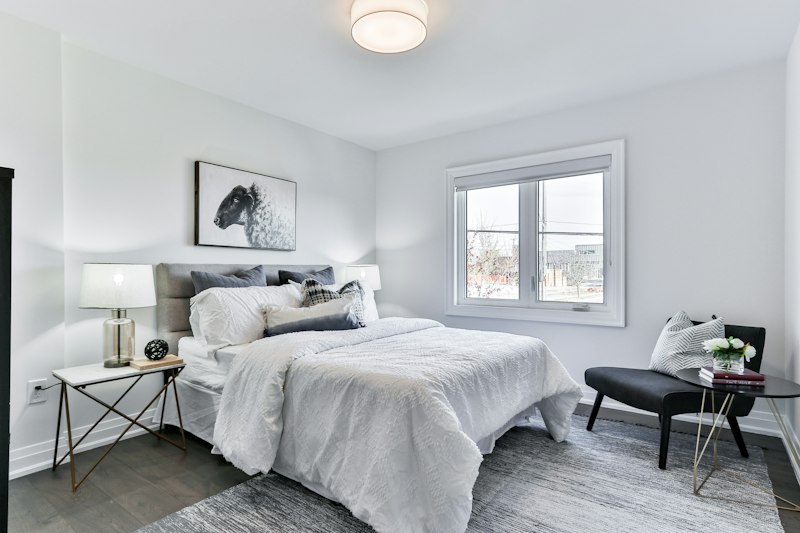
Biophilic sanctuaries welcome lush outdoor garden canopy views by morning while achieving near-total nocturnal darkness at night without intrusive street-lamp glow bleeding past crooked curtain rods. Integrating concealed recessed 150 mm by 150 mm architectural drywall drapery pockets smoothly into window soffit ceilings accomplishes both cleanly.
- Layered Dual-Track Motorized Drapery: Pair light-filtering woven oatmeal Belgian flax linen sheers cleanly on the room-facing track alongside heavyweight 100% opaque dim-out wool-cotton interlined panels stacked neatly flush inside dark side wall return pockets behind wood millwork trim.
- Side Light-Trap Channels: In urban towers bathed continuously in neon LED street wash, specify recessed matte-bronze side L-channels or U-tracks housing perimeter roller shade edges neatly so glowing exterior halo leaks disappear entirely.
- Bird-Friendly Low-Iron Daylight Glazing: Large low-E coated architectural glass framing calm courtyards, olive groves, or balcony planters connects sleepers physiologically with shifting seasonal light cycles while shielding summer solar gain silently. Explore outdoor garden terraces framed directly off suites inside our Garden & Estate Landscape guides.
5. Biophilic Materiality in Upholstered Headboards & Bedding
Skin spends roughly one third of an entire human lifetime resting mere millimeters above mattresses, pillowcases, and headboard fabrics—making clean fiber purity inside bedroom soft goods genuinely vital rather than a minor cosmetic note. Synthetic stain-guard PFAS chemical treatments and petroleum polyurethane memory foams release microscopic airborne compounds silently right beneath sleepers' noses night after night.
Choose kiln-dried solid beechwood bed decks supporting responsive organic GOTS-certified natural Dunlop latex or hand-tufted horsehair, virgin highland British wool, and organic unbleached cotton pocket-coil mattresses free of chemical flame retardants. Extend biophilic purity upwards across custom wide headboards draped in washed stonewashed flax linen, tightly spun sheep boucle, or matte full-grain saddle leather, finished gracefully via multi-layer natural silk and cashmere sleep textiles. Review tactile layer principles in our Luxury Bedding Layering guide.
6. Indoor Air Hydration, Indoor Greenery, and Thermal Micro-Zones
Overheated dry bedrooms trap respiratory dryness and trigger fragmented light sleep well past midnight. Sleep physiology flourishes comfortably inside cool crisp bedroom thermal targets around 64–67°F (18–19.5°C) coupled with balanced relative humidity held smoothly between 40% and 50% using integrated hospital-grade whole-home steam humidifiers routed quietly into dedicated bedroom ducts.
Complement clean mechanical filtration thoughtfully with selective sculptural botanical specimens suited naturally to dappled indoor illumination—such as architectural olive stems, large-leaf ficus elastica, sansevieria cast subtly inside honed limestone troughs, or serene bonsai pines perched neatly near south daylight alcoves. Keep soil pots cleanly top-dressed over washed dark river pebbles to inhibit surface mold spores cleanly inside calm rooms.
7. Minimal Spatial Visual Clutter and Calm Storage Choreography
Visual noise fuels low-grade mental stress long before heads touch down pillows. Primary suites feel dramatically calmer when televisions stay hidden invisibly behind motorized pocket walnut doors—or moved permanently into nearby sitting dens—alongside sleek concealed nightstand wire chases concealing phone charging pads discreetly inside top drawer compartments.
- Architectural Dressing Separation: Channel daily morning clothing drawers, luggage closets, and shoe racks cleanly inside an adjoining enclosed dressing gallery via sliding flush pocket woodwork doors, preserving uninterrupted serene plaster horizons right across the bed view field. Check standard layout measurements inside our Fitted Wardrobes & Dressing Room guide.
- Nightlight Motion Toe-Kick Warmth: Embed shielded 1800K recessed under-bed or baseboard amber orientation strips keyed delicately onto soft quiet infrared motion sensors so midnight trips toward adjoining spa bathrooms never blind sleeping partners or disturb restful drowsiness. Explore fixture specifications inside our Architectural Lighting hub.
8. En-Suite Acoustic & Humidity Transitions Toward Wet Spa Zones
Directly adjoined open-concept bathroom vanities look seductive inside minimalist resort renders yet inevitably pour steam moisture humidity, clattering ceramic echoes, and bright early-morning mirror glow straight across sleeping beds when couples keep offset work schedules. Preserve sensory calm silently through solid architectural pocket or hinged acoustic partition doors finished cleanly on both faces framing dedicated moisture transitions.
Verify quiet bathroom exhaust ventilation pulls smoothly across shower enclosures on timed ultra-quiet remote motors without leaving bathroom spaces drafty, protecting fine wool rugs, upholstered silk wall screens, and raw timber bedroom floors cleanly from chronic wet steam migration. See balanced spa layouts inside our Luxury Bathroom Design index.
Frequently Asked Questions
What is the healthiest zero-VOC wall finish for a primary bedroom sanctuary?
Authentic slaked mineral limewash and natural earthen clay wall plasters top breathable interiors naturally, containing zero petrochemical solvents or acrylic plastic binders while passively buffering minor humidity spikes smoothly across seasons alongside velvety visual depth.
Do wooden slat acoustic panels work effectively directly behind an upholstered bed headboard?
Yes—mounting fine vertical walnut or quarter-sawn oak battens cleanly over dense dark recycled wool felt across headboard accent walls dramatically curbs room bounce echoes while warming minimalist architecture subtly, though solid insulated double drywall behind those slats remains essential if blocking neighboring noise through the wall.
What lighting Kelvin rating prevents melatonin disruption before bed?
Keep all bedside reading sconces and perimeter architectural glow strictly at 2700K dimmed sharply down or fitted with warm-dim drivers stepping smoothly down to amber 1800K–2200K candle glow at least ninety minutes before sleep while turning cooler overhead recessed cans completely off.
Should bedside rugs extend cleanly past both side nightstands?
Ensure wide custom bedroom rugs begin nicely just in front of nightstand front legs—or slide cleanly completely underneath nightstands too—while projecting generously 24 to 36 inches outward across both sides plus bottom foot benches so morning bare steps greet soft natural warm wool instantaneously every day.
Looking to refine bed proportions and bedside geometry cleanly across master suites? Read our Headboards & Nightstand Proportions guide, learn about our curation team via About Luxury Decor Hub, or reach out at Contact Us.


